


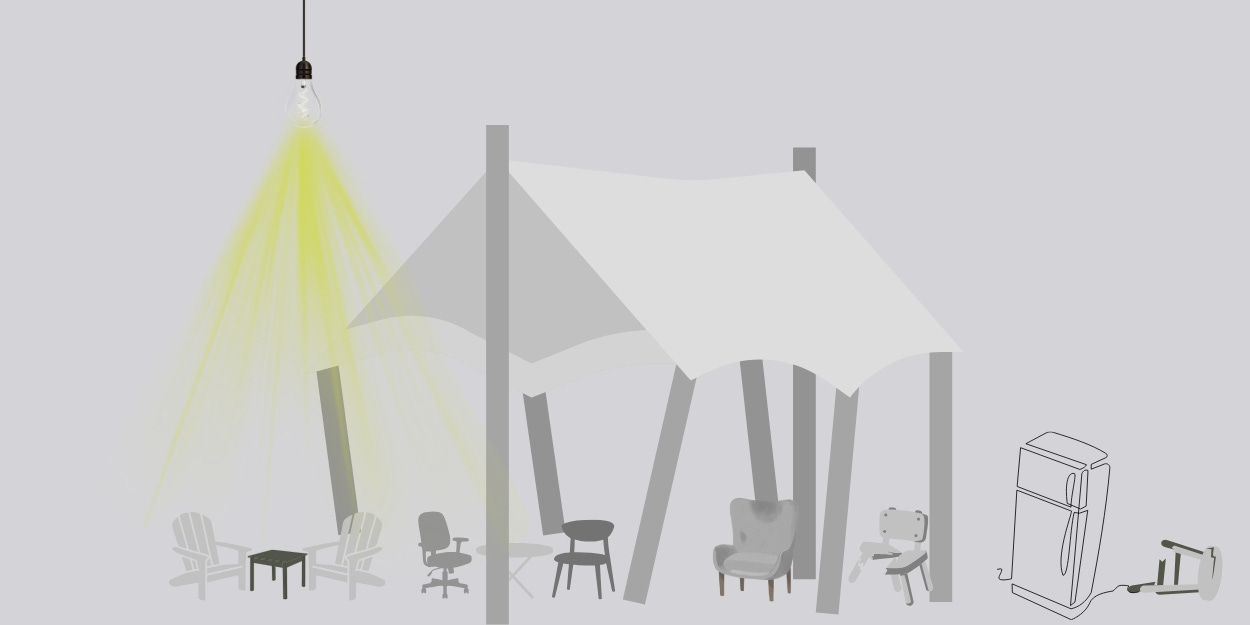
I walked through the vast manufacturing floor with ceiling heights towering above me. The floor plan was so large that I couldn’t see any exits. One of my client’s vessels hung directly overhead, and I’d never seen it in this light: accessible, pristine, dormant.
With the flurry of movement around us, we were relegated to a walking path on the perimeter of the floor. Mid-conversation, I drifted outside the lane and was immediately reprimanded by a production worker passing on a bike.
Safety first, of course.
Each building on the campus was the scale of a New York city block. You could hear a uniform hum in your ears, caused by the buzzing of carts, trucks, bikes, and machinery in the distance. Every site also had its own personality, with uniquely trained craftspeople, products, and materials.
At one point during the tour, we walked into a clean room, which is used for delicate paint detailing. It was mostly white inside, but what was most jarring was how eerily quiet it was by comparison.
We then came across an area that resembled a lunch zone, identifiable only by the leaning fridge covered in dust. Nothing in sight inspired communal dining: tarps assembled with uneven coverage to block out debris, makeshift tables and chairs of different types and colors, and people eating just feet from manufacturing equipment.
These spaces are what my client called shantytowns. His description, not mine.
No one needed to tell those production employees how the company valued them. The space already had.
In industrial manufacturing, the product is king and the employee experience is often an afterthought. Despite its normalcy, the client wasn’t indifferent. He inherited a culture where this had always been the way. We were there because he was trying to change it.
A new hierarchy of needs
We apply Maslow’s hierarchy to people, but rarely to the spaces they inhabit. In partnership with a former colleague, I created the Workplace Hierarchy of Needs to help clients identify and diagnose opportunities to expand the human experience at work.
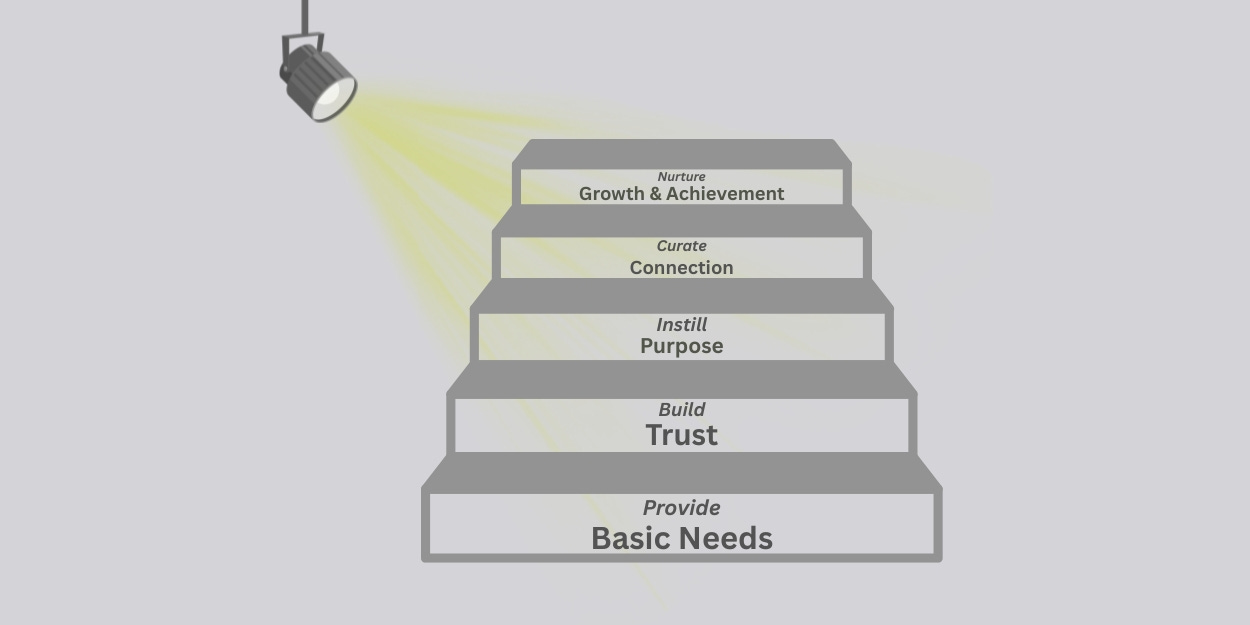
The shantytowns I witnessed on my client’s campus fell below the minimum standards of health and wellbeing. At a basic level, the environment wasn’t frictionless. There were no available clean surfaces to eat on and the tarps only protected so much…we all know that dust doesn’t just travel vertically. And this was the experience for employees who brought their own lunch. For those who needed to buy lunch, hot options were limited, and the roundtrip walk itself to the cafeteria took the entire lunch break.
The best workplace environments extend beyond just the physical; they reflect an ethos of trust, whether employees are in the building or not.
Kickstarter’s 4-day work week is rooted in mutual trust. The executive team trusts that employees will put in a 40-hour week across four days, and employees trust that if they perform at a high level, Kickstarter will continue to maintain this arrangement.
The most exceptional environments go even further. They don’t just support what employees do or how many days they work. They celebrate who they are.
A friend of mine works for a Fortune 100 tech firm that has invested heavily in its campus strategy, and workplace experience is a top priority. Over the last 20 years, it has helped redefine what employee benefits and office amenities can look like. What’s even more impactful is how it supports employee creativity, and who they are outside of their direct roles.
My friend is an avid music buff and deejays across the city. His employer has embraced his talent, enlisting him to deejay major internal events, such as an upcoming summer boat networking celebration for Juneteenth.
The organizations at the top of the hierarchy don’t just trust you. They see you.
The power of place
Environments are not just backdrops; they are active participants in our daily lives.
In corporate settings, they communicate to workers how much they actually matter. They reinforce or contradict the mission statement. In personal spaces, they reveal what’s important to you, what moves and motivates you, what you stand for.
The places we occupy have a direct link to our ability to reach self-actualization in all aspects of life. This shouldn’t be aspirational; it must be a mandate.
The distance between a shantytown for lunch and deejaying a summer boat celebration isn’t just anecdotal. It’s visceral. That distance reflects a set of decisions (made or avoided) about what employees are worth. Every level of the hierarchy is a choice.
The spaces we create are the values we hold.